
Working with the Assistant
The lab builder — the chat panel on the left of the assistant — is how you talk to the AI while it generates a lab. Beyond approving each step of the plan, you can guide the assistant in plain language, answer its questions, review the files it changes, and come back later to edit a finished lab. This page covers those interactions.
The lab builder chat
Section titled “The lab builder chat”The chat streams what the assistant is doing as it works and is where you give it direction. Type into the message box — for example “add a short quiz at the end of chapter 2” or “make the first chapter more hands-on” — to steer the current step.
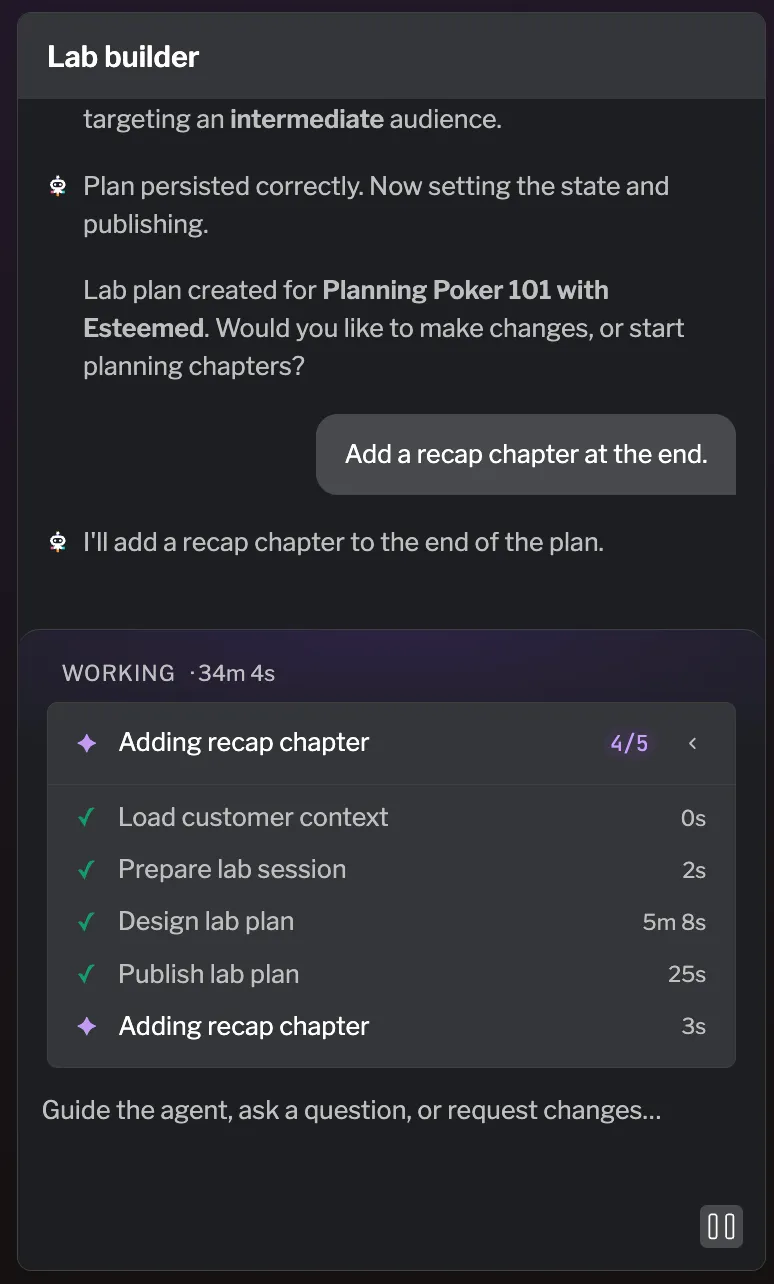
While the assistant is starting up, the chat shows its warm-up status and the input is briefly disabled. Once it’s ready, you can send messages at any time. If the assistant is mid-response and you want to stop it, use the stop control to cancel the current turn.
Answering questions and approving changes
Section titled “Answering questions and approving changes”Sometimes the assistant needs input before it can continue. These prompts appear just above the message box:
- Questions — when a request is ambiguous, the assistant may ask a clarifying question. Answer it to let it proceed.
- File change approvals — before making certain edits, the assistant may ask you to approve a change to a specific file. You can accept it, or deny it and add feedback explaining what to do differently.
Approving and denying are how you keep the assistant on track — think of them as steering the conversation rather than a security gate.
Reviewing generated files
Section titled “Reviewing generated files”Switch the right pane from Plan to Files to browse everything the assistant has generated — the lab’s content, activities, sandbox configuration, and other files. This is useful for checking the actual output or making a precise manual edit yourself.
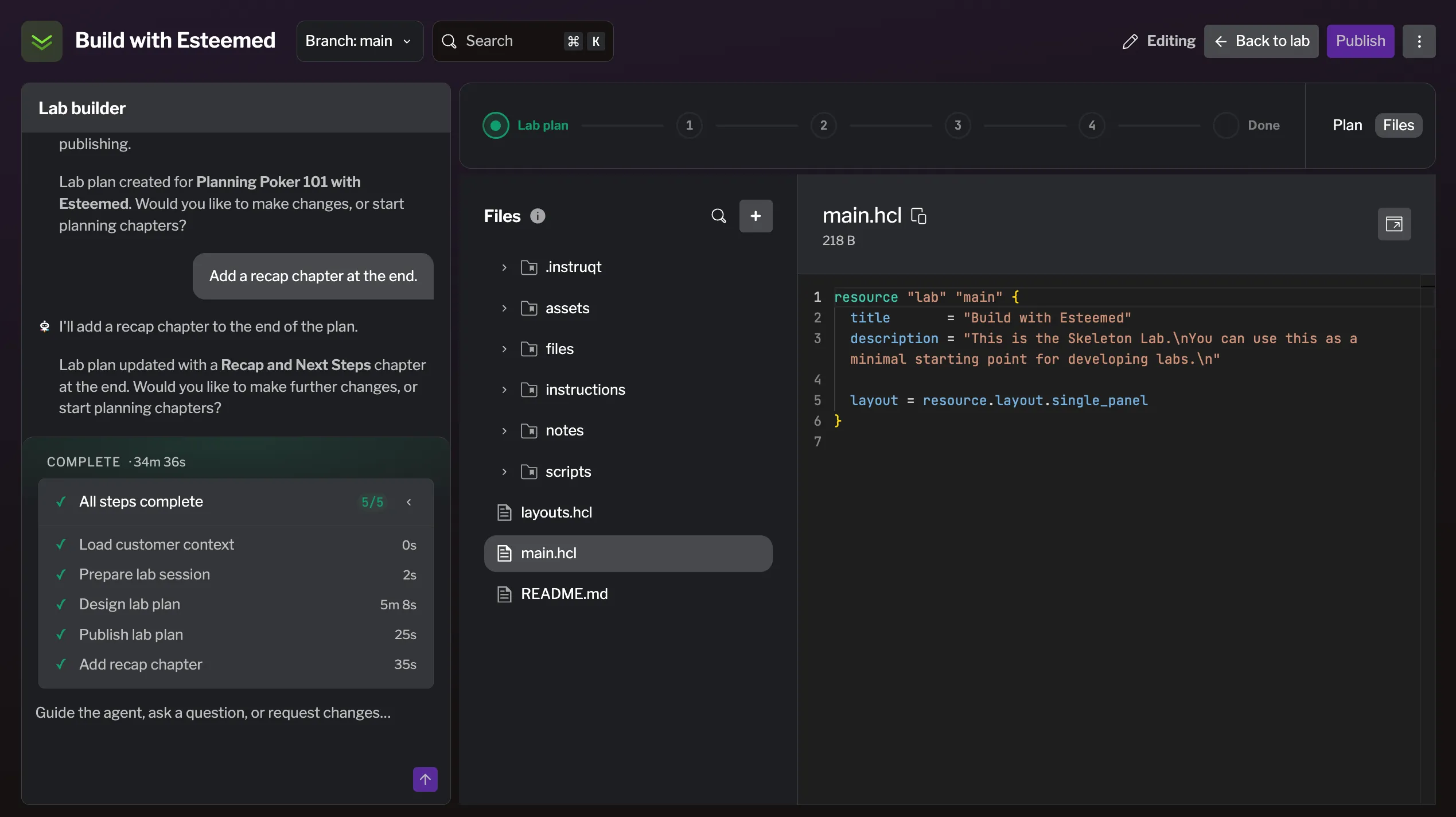
Your edits and the assistant’s edits accumulate together on the same working branch, so you can freely mix chat-driven changes with manual ones. As with any lab, you review the combined changes and save or publish them through version control.
Editing a lab after it’s generated
Section titled “Editing a lab after it’s generated”Generation isn’t a one-way door. You can re-open the assistant on a lab that’s already finished and ask for changes — shorten a chapter, update the sandbox, add a new quiz — without regenerating from scratch. When you re-enter, the assistant reviews what’s already built and reloads your company and product context, then applies your request as an incremental edit.
This makes the assistant useful well beyond the first generation: it’s a way to keep evolving a lab conversationally as your product or training needs change.
Recovering from problems
Section titled “Recovering from problems”If the assistant runs into a problem — for example it fails to start — the chat shows an error and a Try again action to re-provision it. Occasional glitches can also be cleared by refreshing the page; the session reconnects and picks up where it left off, so you won’t lose approved work.